Examining synchronization challenges in multi-jurisdictional progressive networks during peak usage periods
Written by Jordan Flores · Jun 30, 2026
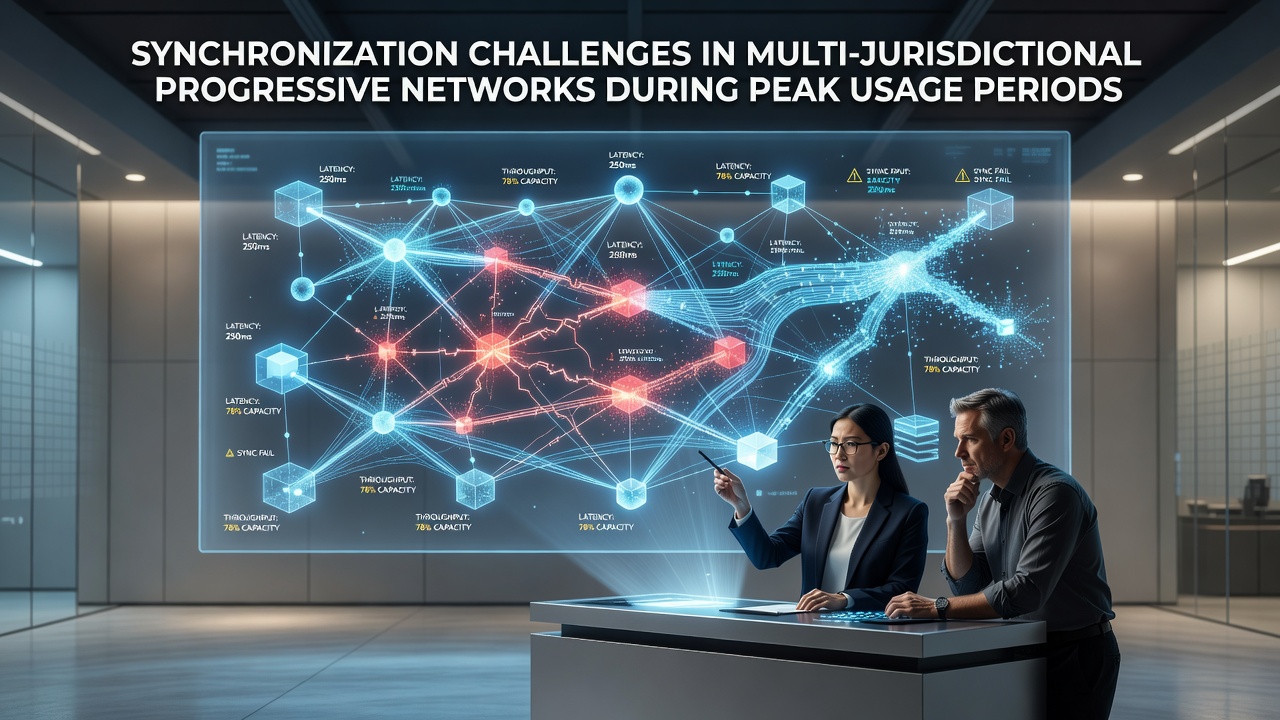
Examining synchronization challenges in multi-jurisdictional progressive networks during peak usage periods
Progressive jackpot systems connect slot machines and other gaming terminals across multiple regulatory jurisdictions, allowing prize pools to grow through contributions from each participating location. These networks require continuous data exchange to maintain a single visible jackpot amount, yet differences in local laws create barriers to seamless operation. Operators must comply with varying tax structures, reporting timelines, and technical standards while keeping the displayed total accurate for players in every region.Core Mechanics of Cross-Border Progressive Pools
Each connected machine sends a small percentage of wagers to a central controller that updates the progressive total and broadcasts the new figure back to all terminals. When machines operate in different states or countries, the controller must reconcile contributions that arrive under distinct licensing rules, currency formats, and data-security mandates. Research from the University of Nevada, Las Vegas International Gaming Institute shows that even minor delays in this loop can cause the displayed amount to diverge from the actual accumulated value.
Regulatory Fragmentation and Its Impact
One jurisdiction may require real-time reporting of every contribution while another permits batch uploads at the end of each shift. Such mismatches force the central system to hold certain transactions in a pending state until verification completes. During high-traffic periods the volume of pending items rises sharply, increasing the risk that a jackpot trigger occurs before all contributions have been validated. Observers note that networks spanning the United States, Canada, and Australia encounter these reconciliation gaps most frequently because each country maintains independent audit trails and currency-conversion protocols.
Peak Usage Patterns Around Major Events
Usage spikes occur when large sporting tournaments or holiday weekends draw simultaneous play across time zones. In June 2026, several North American networks are expected to experience elevated activity tied to international football competitions and summer tourism surges. Data collected by the Canadian Gaming Association indicates that progressive pools can receive up to four times their normal contribution rate during such windows, placing immediate stress on synchronization servers and communication links between jurisdictions.
Technical Latency and Data Integrity Issues
Network latency between data centers in different countries adds milliseconds to each update cycle. When thousands of machines transmit simultaneously, these small delays accumulate and can produce brief discrepancies visible to players. Systems employ timestamping and sequence numbering to reorder incoming packets, yet packet loss or rerouting during congestion sometimes forces manual intervention. Industry reports show that operators have adopted redundant satellite and fiber paths, yet complete elimination of variance remains difficult when regulatory firewalls restrict direct server-to-server access.

Case Examples from Existing Networks
Take the Caribbean-linked progressive system that pools contributions from licensed operators in multiple island nations. During a regional music festival in 2024, the network recorded a 300 percent increase in play volume over four days. Technicians observed that one jurisdiction's daily reporting requirement created a six-hour lag before contributions could be added to the shared total. The resulting mismatch triggered customer-service inquiries and temporary jackpot freezes until reconciliation finished. Similar patterns have appeared in European networks where GDPR data-localization rules limit how quickly transaction records can cross borders.
Approaches Operators Use to Reduce Synchronization Errors
Many networks now segment progressive pools into smaller regional sub-pools that merge only at predetermined intervals. This reduces the number of live connections required at any moment. Others deploy edge servers inside each jurisdiction that pre-validate contributions before forwarding summarized totals to the central controller. According to documentation published by the Australian Communications and Media Authority, such edge processing has lowered average update latency by 40 percent on monitored routes. Encryption standards and mutual authentication protocols further ensure that delayed or corrupted packets are detected and discarded rather than applied to the live total.
Future Developments and Monitoring Tools
Developers continue to test distributed-ledger approaches that allow each jurisdiction to maintain its own immutable record while still feeding a unified jackpot figure. Pilot programs in select U.S. states have demonstrated that blockchain-based ledgers can reconcile contributions within seconds even when participating regulators require different data formats. Continuous monitoring dashboards now track contribution velocity, packet-loss rates, and cross-border latency in real time, enabling operators to shift traffic to alternate routes before discrepancies become visible to players.
Conclusion
Multi-jurisdictional progressive networks deliver larger jackpots by combining play across borders, yet the same geographic spread introduces persistent synchronization demands. Regulatory differences, transmission delays, and sudden volume increases during peak periods all test the accuracy of the shared total. Operators address these pressures through segmented pools, edge validation, redundant pathways, and emerging ledger technologies. As events in June 2026 approach, monitoring systems will provide further data on how effectively current solutions maintain consistency under sustained high load.