Mapping Cloud-Based Architectures Impact on Latency Reduction During Live Streaming Casino Sessions Across Multiple Continents
Written by Jordan Flores · Aug 18, 2026
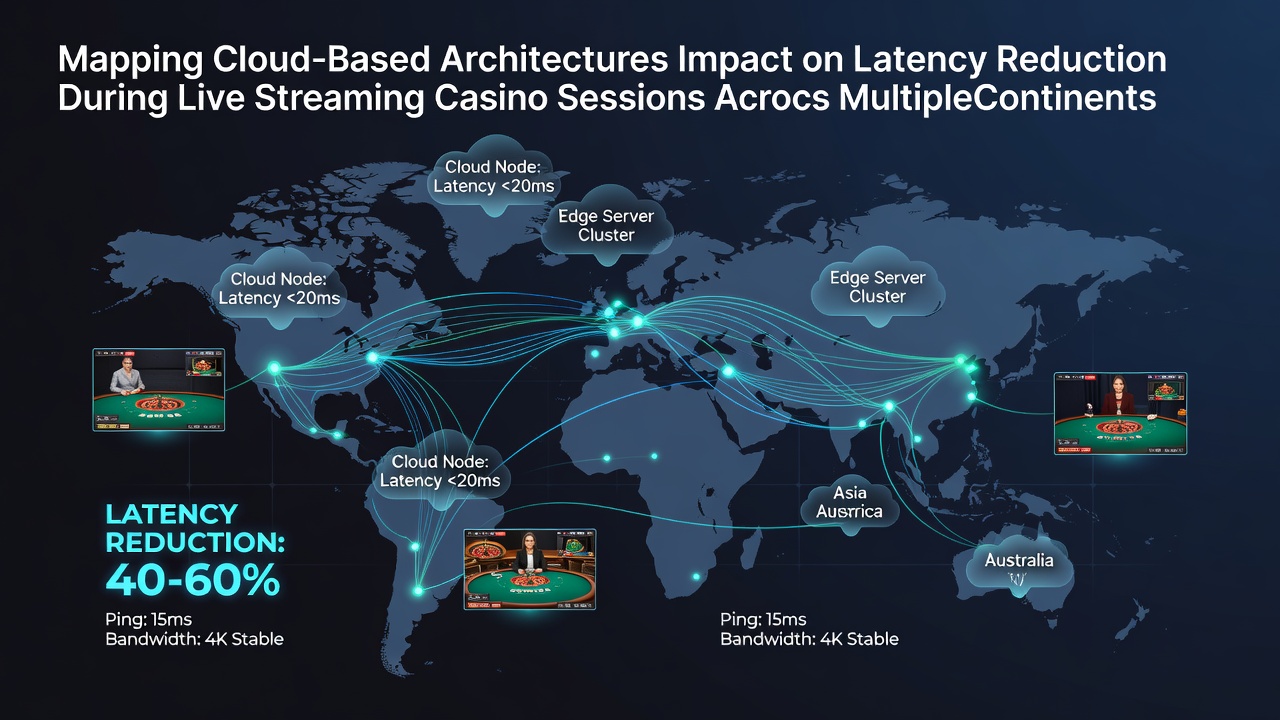
Mapping Cloud-Based Architectures Impact on Latency Reduction During Live Streaming Casino Sessions Across Multiple Continents
Cloud-based architectures have transformed how live streaming casino sessions operate across multiple continents by distributing computational resources closer to end users and reducing the physical distance data must travel. These systems rely on networks of data centers, content delivery networks, and edge computing nodes that process video feeds from dealers in real time while synchronizing bets from players in distant regions. Operators deploy these setups to handle high volumes of concurrent connections without introducing noticeable delays during gameplay.
Core Components of Cloud Architectures for Global Streaming
Modern cloud setups for live dealer games incorporate regional availability zones that mirror content across continents, and they use protocols like WebRTC to maintain low-latency video transmission. Data centers in North America connect with counterparts in Europe and Asia through dedicated fiber links, which allows a session originating in one location to reach audiences elsewhere with synchronized timing. Researchers have measured round-trip times dropping below 50 milliseconds in optimized configurations when edge nodes handle encoding tasks locally rather than routing everything through central servers.
Edge computing plays a central role because it processes video compression and player input validation at facilities nearer to participants, and this approach avoids bottlenecks that arise from transcontinental data hops. In August 2026 several providers expanded edge capacity in Southeast Asia and South America to support growing demand from emerging markets, with deployment logs showing latency reductions of up to 35 percent for sessions involving players on separate landmasses.
Latency Measurement Across Regions
Studies conducted by academic teams track latency through metrics such as frame delivery variance and input-to-action delay, and these figures vary depending on the distance between the live studio and the viewer's location. Sessions streamed from European studios to Asian participants previously averaged 120 milliseconds of delay before cloud optimizations, yet recent deployments using distributed nodes have brought that figure closer to 40 milliseconds according to reports from the International Telecommunication Union. Observers note that similar patterns appear when North American studios serve African and Australian audiences, where content delivery networks cache video segments at multiple hops along the route.
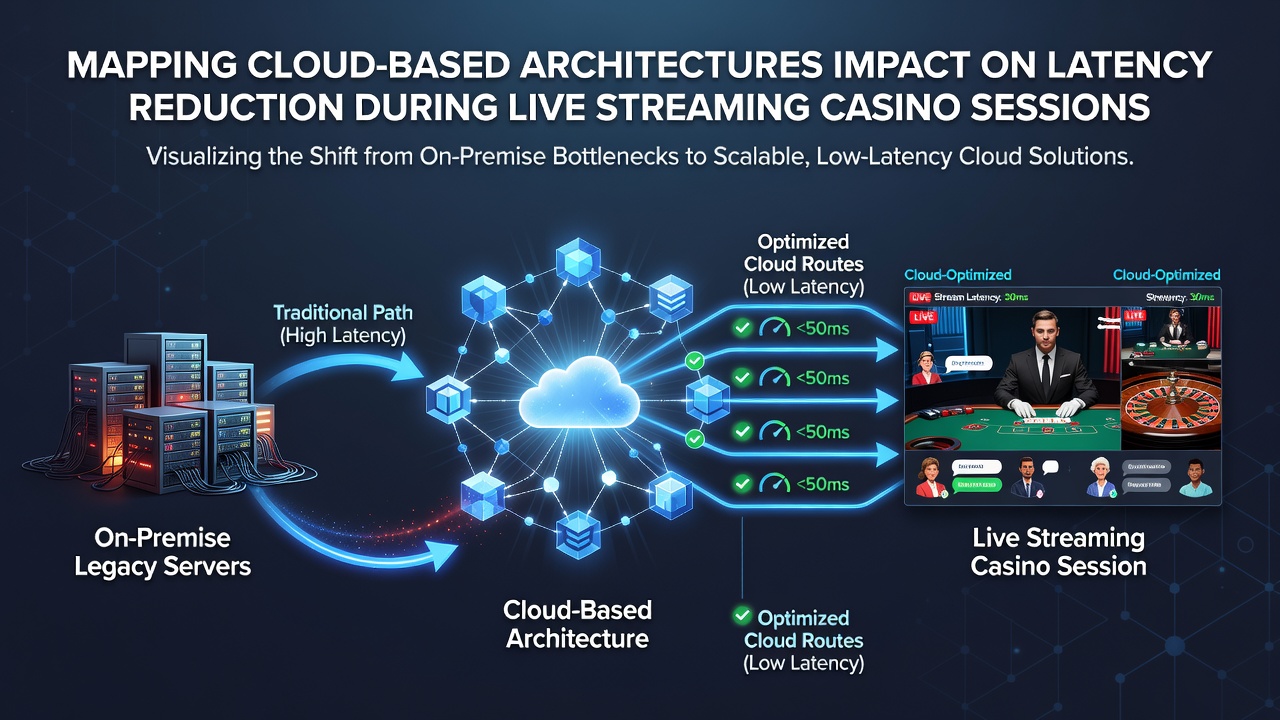
Packet loss rates also decline under cloud architectures because redundant paths allow traffic to reroute automatically when one link experiences congestion. Data collected from monitoring tools reveal that multi-region setups maintain loss below 0.1 percent during peak evening hours across continents, whereas single-region hosting often sees spikes above 1 percent during the same periods. These measurements come from controlled tests that simulate simultaneous connections from thousands of devices spread over six time zones.
Regional Deployment Patterns and Performance Data
Operators in different jurisdictions have adopted varying strategies for cloud placement, with some prioritizing direct peering agreements with local internet service providers while others rely on global hyperscale providers. In Europe the European Gaming and Betting Association has documented how cloud nodes positioned in Frankfurt and Amsterdam cut average latency for Scandinavian and Mediterranean players by routing traffic through shorter paths. Comparable projects in Australia and Canada focus on local edge facilities that handle encoding for sessions originating in Asia, and performance logs indicate consistent improvements in frame stability during live roulette and blackjack broadcasts.
Bandwidth allocation models further influence outcomes because cloud platforms scale resources dynamically based on session volume, and this elasticity prevents the buffering that occurs when fixed server capacity is exceeded. Figures from industry monitoring services show that sessions crossing the Pacific Ocean benefit most from these adjustments, with average viewer-side delays falling from 90 milliseconds to 55 milliseconds after targeted node additions in 2025 and 2026.
Integration with Existing Casino Infrastructure
Live streaming platforms integrate cloud services through APIs that connect dealer cameras and game servers to distributed networks, and this linkage allows real-time adjustments to encoding quality based on detected network conditions. Technicians monitor these connections through dashboards that display per-region latency heat maps, enabling rapid scaling when traffic surges occur during major sporting events or promotional periods. The architecture supports failover mechanisms that shift streams to alternate nodes within seconds if primary paths degrade, preserving session continuity for players regardless of their continent.
Security layers embedded in these cloud systems encrypt video streams and bet data at each hop, and compliance frameworks require that encryption overhead does not add measurable latency. Tests performed under regulatory oversight confirm that end-to-end encryption maintains the same sub-50-millisecond thresholds achieved in unencrypted test environments when hardware acceleration is available at edge locations.
Conclusion
Cloud-based architectures continue to reshape latency profiles for live streaming casino sessions that span multiple continents through strategic placement of edge nodes, dynamic resource scaling, and redundant routing. Performance data collected through 2026 demonstrate measurable reductions in delay and packet loss when these systems operate across coordinated regional zones. Continued expansion of capacity in underserved areas supports further alignment of session quality regardless of participant location.